Tankless Water Heater Error Codes: What 10 Common Ones Mean
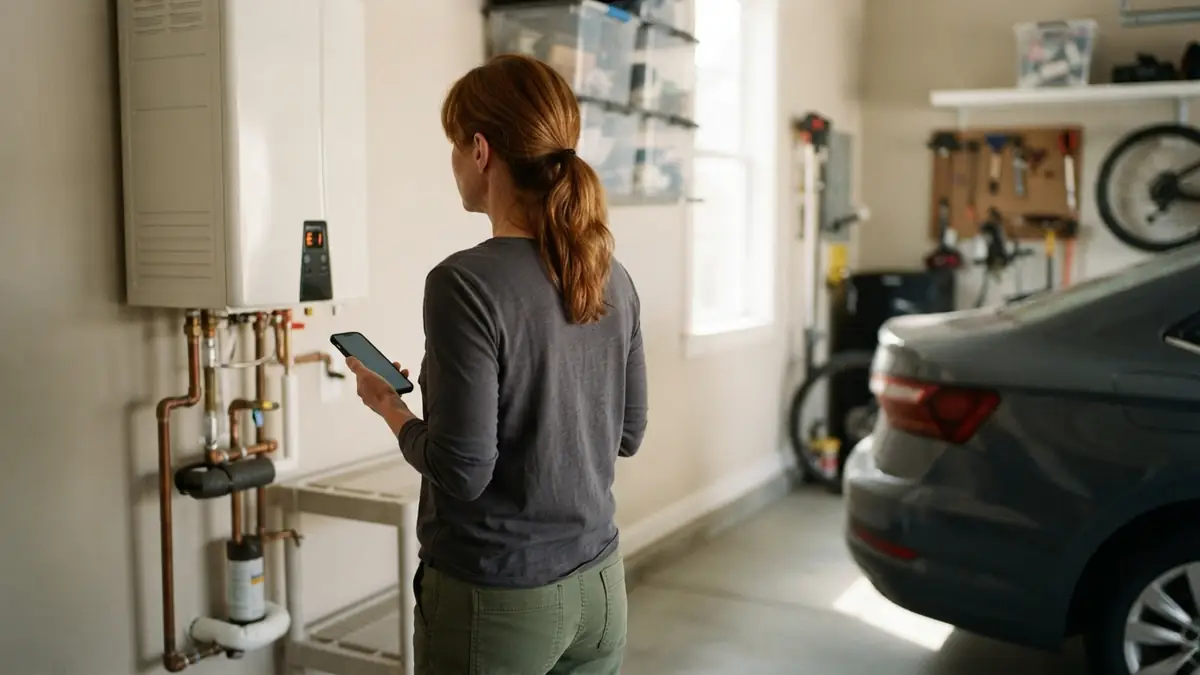
Every tankless water heater error code is the unit telling you which safety check it failed. Tankless water heater error codes are not a shared language, though: the same number can mean different things on different brands, so start by reading the exact code on the display and the maker's name on the data plate.
The ten below are the codes owners ask about most and the ones technicians list for the major brands. They fall into four groups: ignition, flame, air and exhaust, and overheating or scale. Your manual has the last word for your model, so treat this as a map. If a code keeps coming back, get a technician out to read the unit's history.
First, write the code down
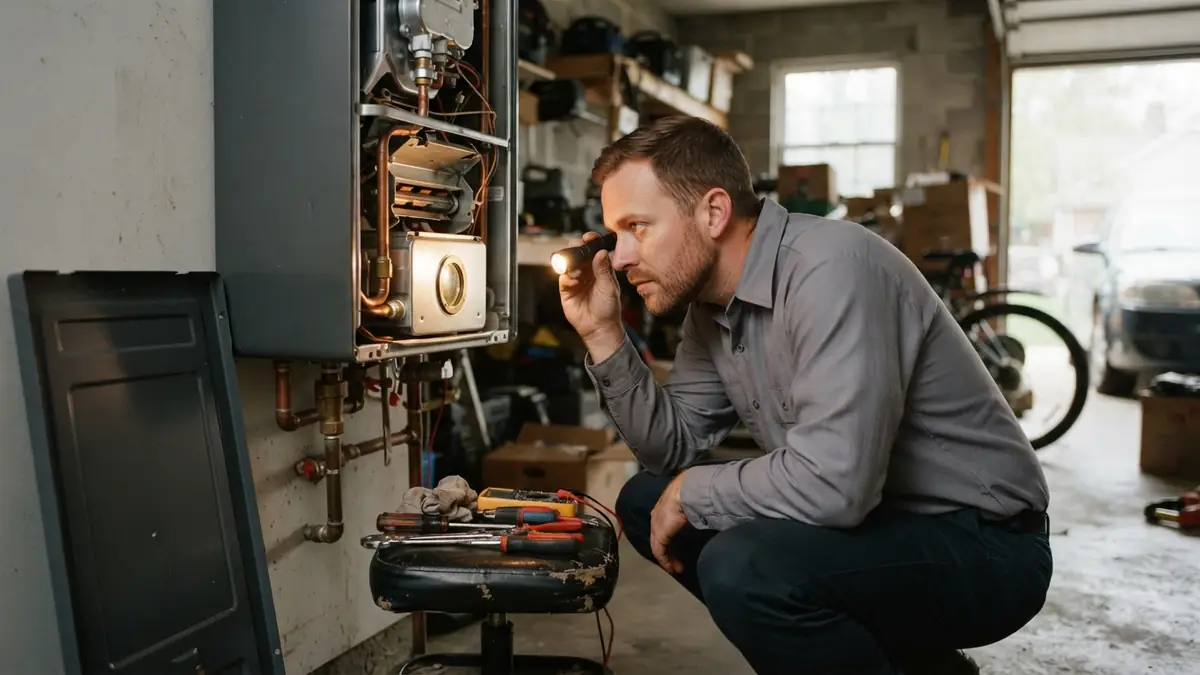
Read the exact code, including any letter in front of it. Photograph the display and the data plate with the model and serial number, so you can describe the unit precisely on a call. Also note what was happening when it appeared: a start-up, the middle of a shower, a storm, a power cut or a freeze. That context often narrows the cause faster than the number does.
Ignition codes: 11, 111 and E003
On Rinnai, Noritz and Rheem units, code 11 means no ignition: the unit asked for heat and the burner never lit. Takagi and A.O. Smith units show 111 for ignition failure, and Navien shows E003. The usual causes are shared by all of them: gas off or a line that is too small, low gas pressure under load, a failed igniter, a dirty or wet flame rod, or a blocked vent.
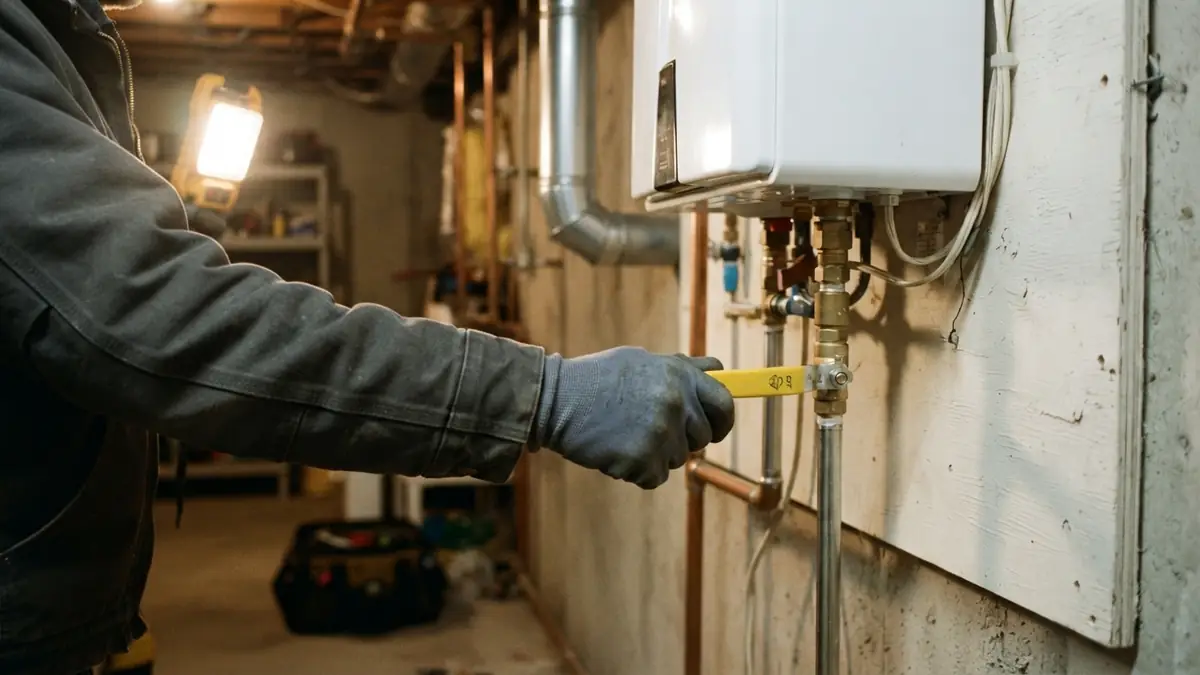
Two of those you can check yourself, the gas shutoff handle and the outside vent termination. The rest involve gas and combustion, which is technician work. The guide to why a tankless won't ignite goes through each cause.
Flame failure: code 12
On Rinnai and Noritz units, code 12 means flame failure: the burner lit and then the flame was lost. The suspects are the flame rod, gas pressure that sags once the burner is running, and the venting. A flame code that only appears while the furnace, the dryer or the range is on is a strong hint that the gas supply is the weak point, so mention it to the technician.
Air and exhaust codes: 10 and E110
Code 10 on Rinnai and Noritz points to the air supply or the exhaust. Navien's version is E110, a venting or air intake problem. A termination buried by snow, a nest or leaves in the vent cap, and a vent run that is too long are the usual reasons.
Clearing snow, leaves or debris from the outside termination by hand is fine. Anything inside the vent pipe is not an owner job. If the code returns with the outside clear, stop resetting the unit and call.
Overheat and scale codes: 14, E016, E030 and LC
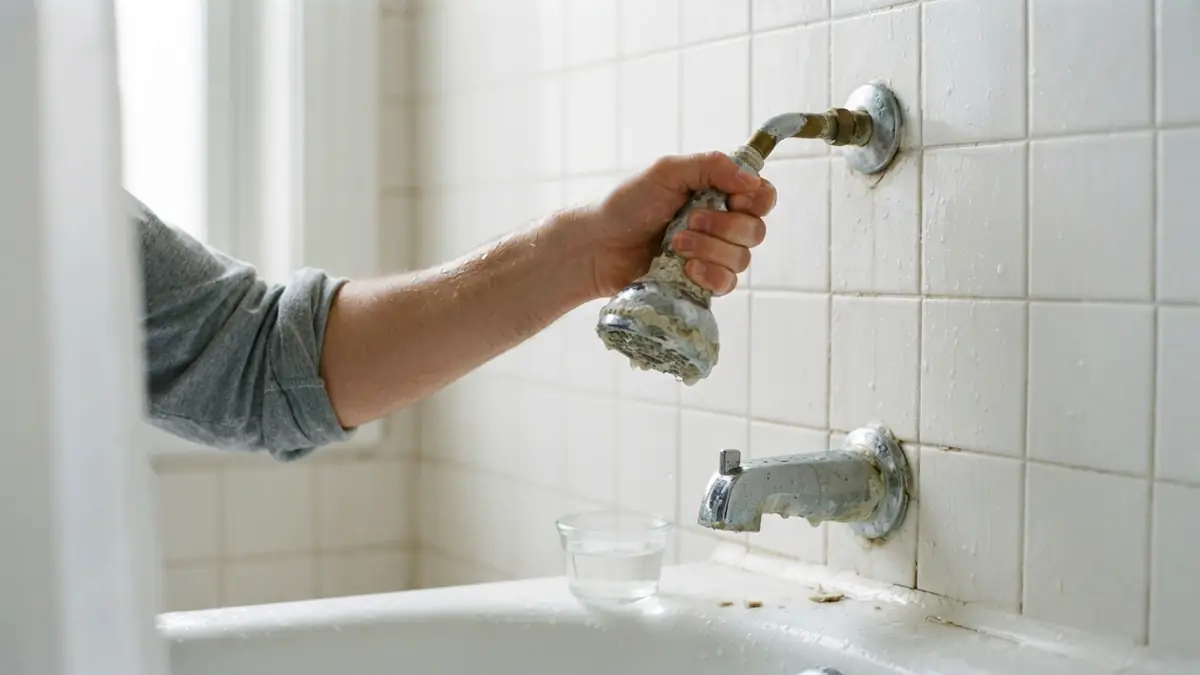
Code 14 is an overheat or thermal fuse fault on several brands. On a Navien, E016 means overheating and E030 means a high exhaust temperature. Scale in the heat exchanger sits behind many of these, because it insulates the metal and forces longer burn cycles. Rinnai's LC codes name lime scale directly.
These are the codes a flush can clear for good, so if the unit has never been flushed, start with how to flush it. If it was flushed recently, the cause is more likely restricted flow or a failing sensor, and that needs a technician.
Other numbers you may see
Rinnai 49, 70 and 71, Noritz 20, 29, 45, 51, 90 and 120, Rheem 17, 24, 29 and 99, and Takagi 121, 391 and 991 all turn up in owner searches. What they mean depends on the maker and the model, and we are not going to guess at them. Look the number up in your manual's code table, or give it to the technician along with the model and serial number.
How to clear a code, and when not to
Most units clear a code after a power cycle: switch the unit off at its power switch or unplug it, wait a short while, then switch it back on. Some controllers also have a reset or clear key, and the manual shows which. Owners report that an occasional Navien E003 or Rinnai ignition code can clear this way.
One reset is fine. A code that comes back within a day points to a real gas, venting, sensor or scale problem, and repeated resets on an ignition or exhaust fault can be unsafe. Do not cycle the power over and over to get through a shower. If you smell gas at any point, get everyone outside and call the gas utility from there.
What a code visit costs
A diagnosis visit is estimated at $100 to $250. The part repairs that follow, such as an igniter, a flame rod or a flow sensor, usually fall in an estimated $150 to $800, and a descale is estimated at $150 to $350. These are estimates only; the technician agrees the price in writing before work starts.
Quick answers
What does code 10 mean on a tankless water heater?
On Rinnai and Noritz units it points to the air supply or the exhaust, usually a blocked or buried termination or a vent run that is too long. Navien shows E110 for the same area. Clear the outside termination by hand and leave anything inside the vent pipe to a technician.
How do I clear the error code on my Navien tankless water heater?
Switch the unit off at its power switch, or unplug it, wait briefly and switch it back on. If E003, E110, E016 or E030 returns, the cause is real and more resets will not fix it. Repeated resets on an ignition or exhaust fault can be unsafe.
How to clear error codes on a Rinnai tankless water heater?
A power cycle clears most of them, and your manual shows whether the controller has a reset key. An LC code means lime scale, so it comes back until the heat exchanger is descaled.
What does code 111 mean on a Takagi tankless water heater?
Ignition failure: the unit tried to light and got no flame. The causes are gas supply or pressure, the igniter, the flame rod or the venting. A.O. Smith units use 111 for the same fault.
What are the common error codes for tankless water heaters?
Ignition (11, 111, E003), flame failure (12), air and exhaust (10, E110) and overheat or scale (14, E016, E030, LC). Meanings vary by manufacturer, so check yours.
Still no hot water?
A technician who works on tankless units can test it and price the fix in writing.