How to Flush a Tankless Water Heater: 6 Steps, and When to Call Instead
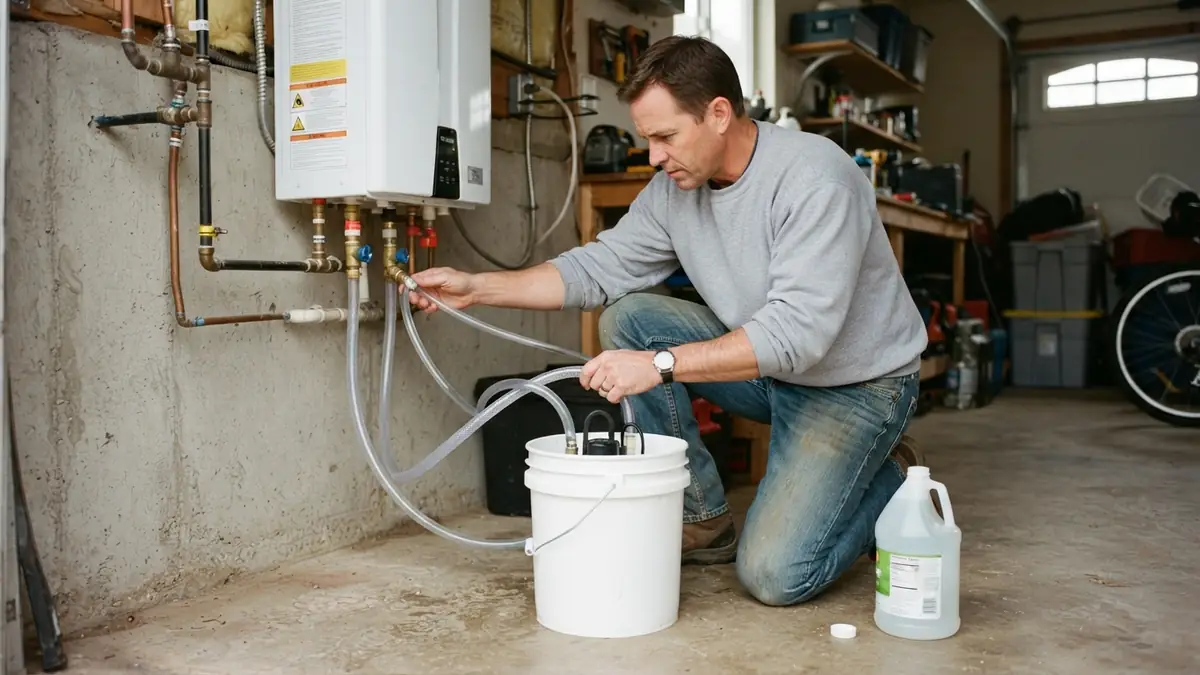
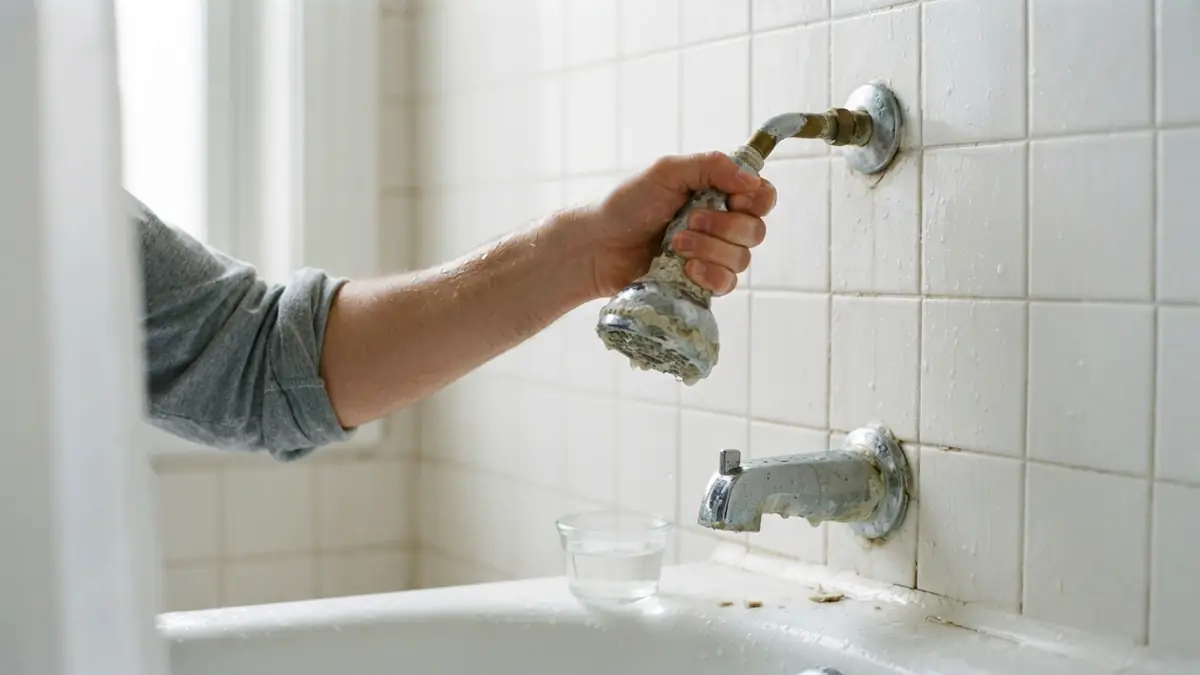
Hard water leaves scale inside a tankless heat exchanger, and a flush is how it comes out. Knowing how to flush a tankless water heater gives you one of the few bits of maintenance an owner can do without a technician: a small pump, two hoses, a bucket and a cleaning solution, connected to the unit's service valves.
Below you will find how often to do it, vinegar against descaler, the six steps, what black water means, and the cases where you should call a technician instead. Your manual has the exact procedure and approved solution for your model. Where it differs from this guide, follow the manual.
How often a tankless needs flushing
Manufacturers call for a flush every year. On hard water, every six to twelve months is common advice. On very soft water the gap can stretch, but skipping flushes for years is where trouble starts: scale codes, lukewarm water, overheating and a shorter life for the heat exchanger.
The date matters for another reason. Warranties usually depend on registration and maintenance, and a maker can ask for proof of regular service. Write the date on the unit or in your phone each time.
Vinegar or a descaler?
Both dissolve scale. White vinegar is the cheap option and the one most owner write-ups use. A descaler made for tankless heaters is the other, and some owners prefer it. Your manual names what it accepts, and that settles it. Do not go stronger than the manual allows: old fittings that were already corroded can start to seep once a flush disturbs them, as one owner found with a corroded copper line after a vinegar run.
What you need before you start
The unit needs service valves, also called isolation valves: a hot-side and a cold-side valve under the unit, each with a port and a cap. Units installed without them need them added first, and that is a plumber's job.
With valves in place, you need a small circulating pump, two hoses that fit the ports, a clean bucket, a few gallons of vinegar or descaler and a towel.
The flush in six steps
Step 1. Turn the unit off at its power switch, or pull the plug. Follow your manual on whether the gas valve should also be closed during the flush.
Step 2. Close the hot and cold isolation valves, then unscrew the caps from the service ports.
Step 3. Run one hose from the pump to the cold-side port and the other from the hot-side port back into the bucket. Pour the solution into the bucket.
Step 4. Open the ports, start the pump and let the solution circulate for about 45 to 60 minutes. A unit that has not been flushed in many years can need longer; one owner ran a decade-old unit for an hour and a half.
Step 5. Stop the pump and take the hoses off. Following your manual's rinse procedure, run fresh water through the unit until it comes out clear. Then take out the inlet filter, rinse it and put it back.
Step 6. Refit the caps, return both valves to their normal position, switch the unit on and run a hot tap for a few minutes. Check the valves and caps for drips, and write down the date.
What black water means
On a first flush after years, black or dark water is normal. It is scale and sediment coming loose, which is what a neglected or heavily used unit looks like. If the solution stays clear for the whole run, the unit probably had little scale to begin with. In both cases the cure is the same: flush again in six to twelve months, not in years.
When to call instead
Call a technician if the unit has no service valves, if a valve will not turn or a cap will not seal, if anything leaks after the flush, or if codes such as LC, E016 or E030 keep returning afterwards. A unit with years of heavy scale that no longer heats may need more than one run. A technician flush is estimated at $150 to $350.
If the unit still keeps shutting off after a flush, the cause is somewhere else, and the scale codes are a good place to confirm what the display is telling you.
Quick answers
Can I descale my own tankless water heater?
Yes, many owners do. It takes a pump, hoses and a bucket on the service valves. Units without valves need them added first, and a flush will not fix a failed part.
How often should tankless water heaters be serviced?
Once a year is the usual maker guidance, and every six months on very hard water. Very soft water can stretch it. A service visit can also check the filter, the venting, the water connections and the combustion.
Can I use 30% vinegar to descale a tankless water heater?
Check your manual first. It names the solution it allows, and going stronger than that risks the fittings. Ordinary white vinegar, or a descaler made for tankless heaters, is what most owners use.
Is it necessary to descale a tankless water heater?
On hard water, yes. Scale builds in the heat exchanger and leads to scale codes, lukewarm water and early failure. Manufacturers call for an annual flush, and a warranty claim can depend on it.
How much does it cost to descale a tankless water heater?
A technician flush is estimated at $150 to $350. Doing it yourself costs a pump, hoses and solution once, then an hour or so each year.
Still no hot water?
A technician who works on tankless units can test it and price the fix in writing.