Tankless Water Heater Won't Ignite? 6 Causes, and Which Ones Are Yours to Check
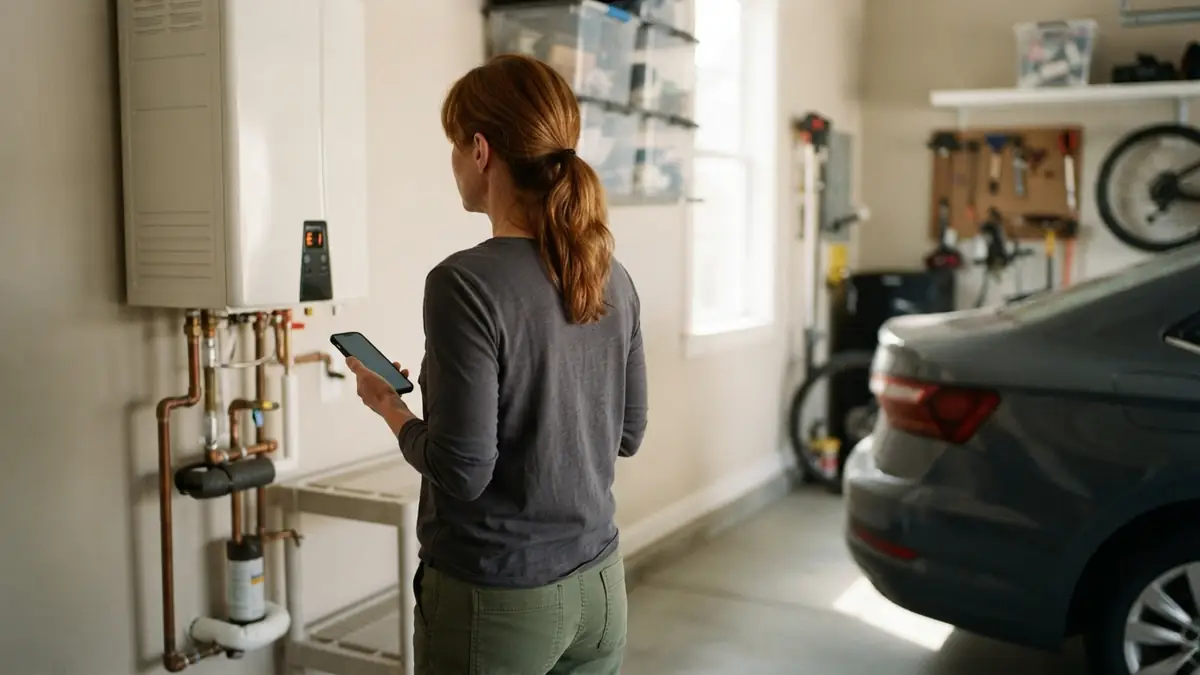
When a tankless water heater won't ignite, the display usually says so: code 11 on Rinnai, Noritz and Rheem, 111 on Takagi, E003 on Navien. The unit opened the gas, tried to light the burner, got no flame and shut itself down to stay safe.
That shutdown is the system working. The six causes below run from a closed valve to parts that only a technician should touch. Only two are owner checks: the gas shutoff and the outside vent. The rest involve gas, combustion or wiring, so get a technician out for those. If you smell gas, get out first and call the gas utility from outside.
1. The gas is off or interrupted
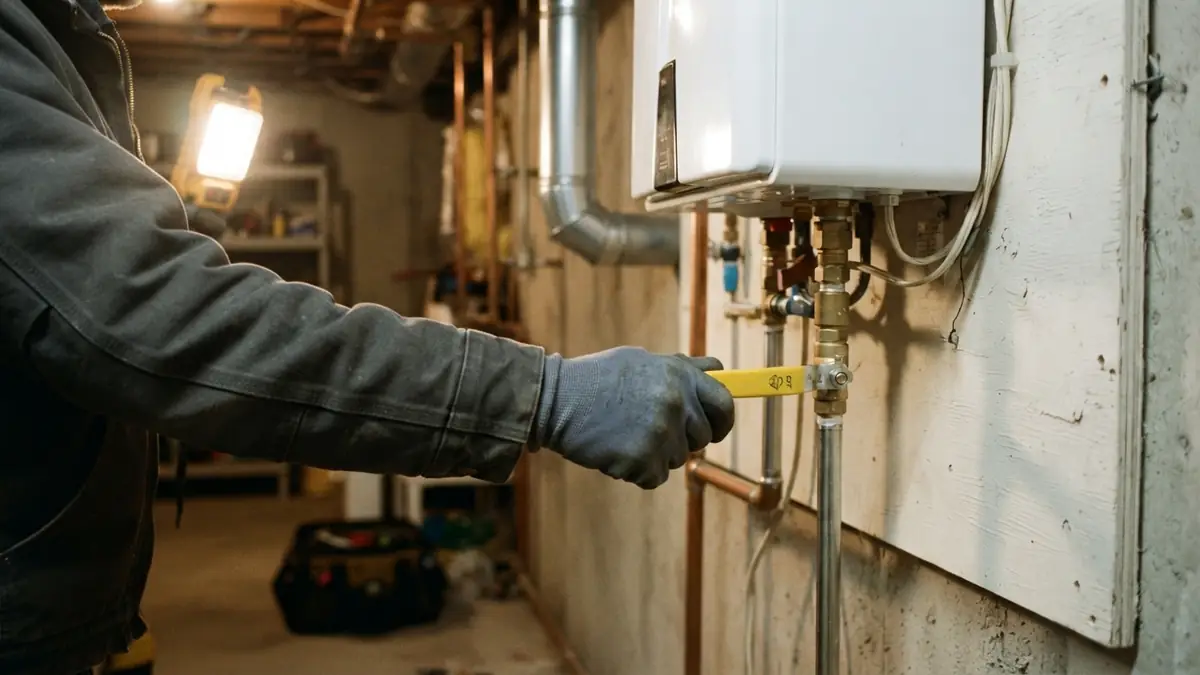
Start with the simplest cause. Confirm the handle on the gas line to the unit is open, and on propane, that the tank is not empty. A supply that was interrupted for any reason, from work on the line to a closed meter, can leave the unit asking for gas that is not arriving. One owner whose Rinnai had no hot water was told to confirm the gas meter was on before anything else.
If other gas appliances have gone quiet too, the problem sits upstream of your unit. Leave the fittings alone and call the gas utility. If the display is dark rather than showing a code, start instead with the seven not-heating checks, which begin with power.
2. Gas pressure that drops under load
Most gas tankless units need a larger gas line than a tank heater, commonly 3/4 inch. If the line is too small, or other appliances share it, the pressure can sag the moment the burner opens, and the unit fails to light or loses its flame. The clue is a code that shows up when the furnace, the dryer or the range is also running.
Pressure is measured with the burner at full fire, which takes the right gauge and a licensed technician. Do not adjust a regulator yourself. Some brands are also sensitive to propane pressure, so on propane the tank side is part of the picture too.
3. A worn igniter
The igniter is the part that lights the gas, and like any part it wears out. A failed or weak igniter brings code 11, 111 or E003, and a unit that lights on some tries and not on others is one of the signs. Replacing it is a straightforward job for a technician and falls inside the estimated $150 to $800 range for part repairs.
A repeat of the same code after one reset means the part needs looking at, not another reset.
4. A dirty or wet flame rod
The flame rod tells the board that a flame is present. If it is coated or damp, the board cannot see the flame and shuts the gas, which shows up as an ignition or flame failure code. A technician may also find a wiring short or a dirty burner. Cleaning the rod means opening the burner area, so it is not an owner job.
5. Blocked venting or a clogged intake
A gas unit has to breathe. A blocked termination, a clogged intake screen or a vent run that is too long can stop it lighting or keep it lit. Snow after a storm, leaves and nests are the usual culprits. Clearing the outside termination of snow and debris is fine for an owner; anything inside the pipe is not.
A clogged condensate drain is another cause owners find when a unit lights and then quits after a few seconds. That one is technician work too.
6. The gas valve or a poor ground
Inside the unit, the gas valve itself can be at fault. A Rheem owner given code 11 was told it could be the gas valve, the ignition parts or the gas supply. Technicians also point to a poor electrical ground on some brands, and the manual lists the inlet gas pressure range the unit expects. Both are gas and electrical jobs for a technician.
What a technician checks, in order
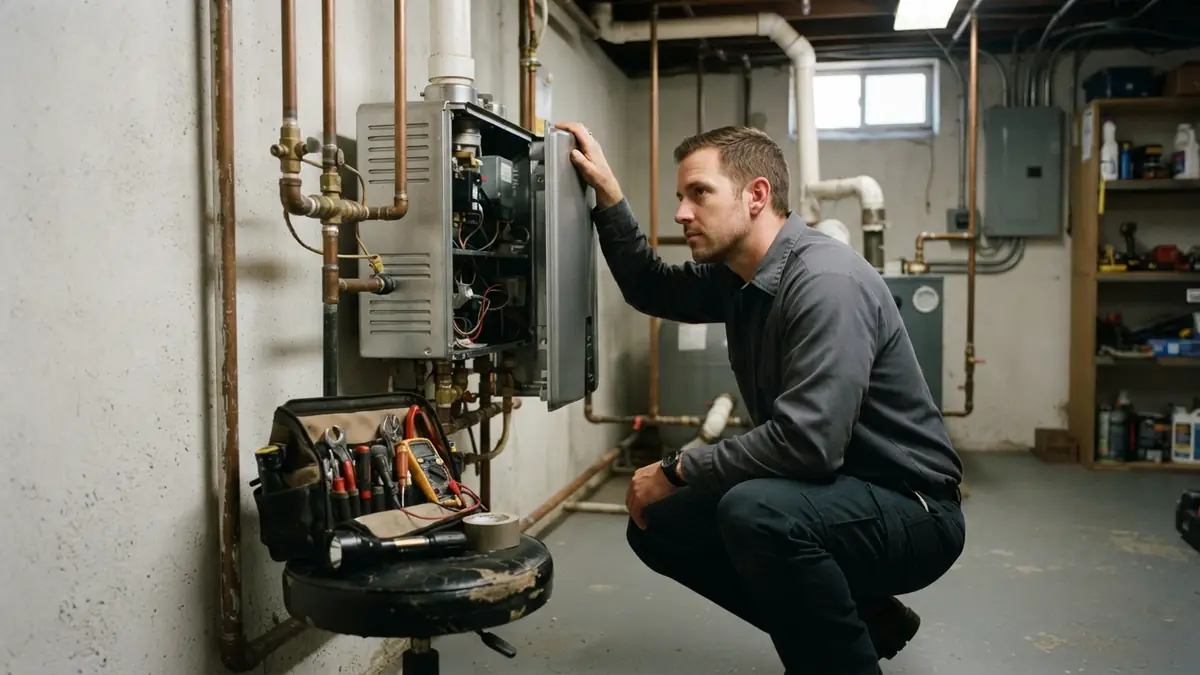
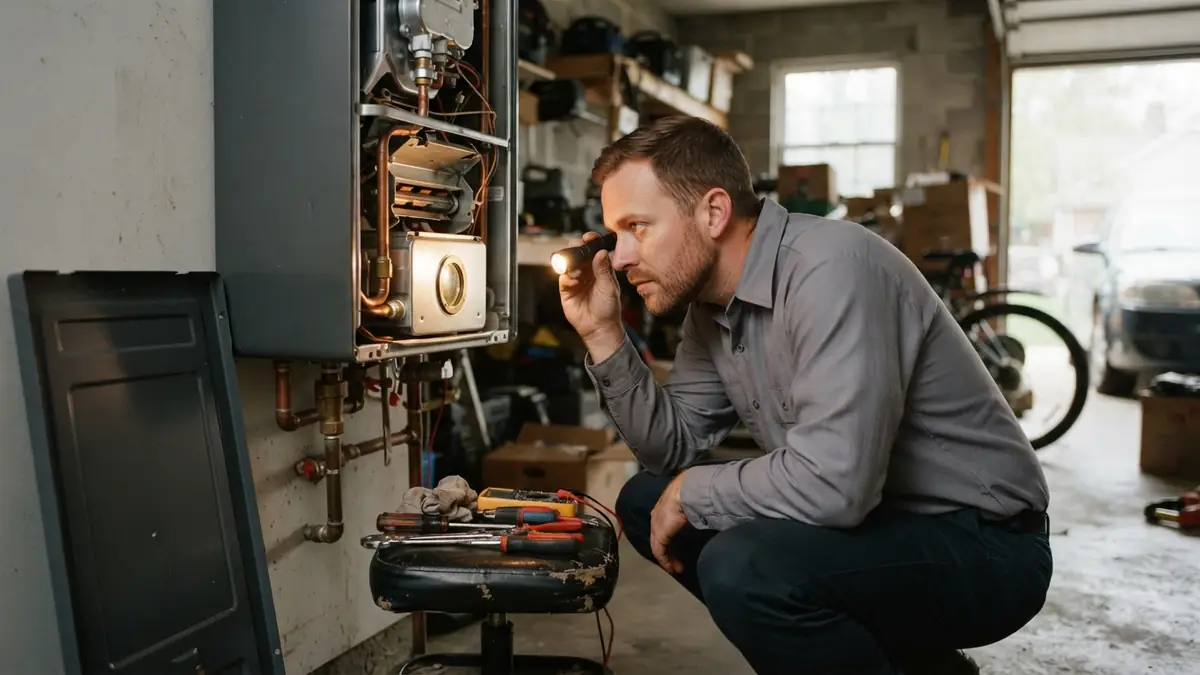
A visit usually runs in the same order: read the stored code history, check the gas supply and measure pressure with the burner at full fire, inspect and test the igniter and flame rod, look at the vent, the intake and the condensate drain, and only then test the gas valve and the wiring. The fix is a part, a cleaning or a gas line change. A diagnosis is estimated at $100 to $250, and a written quote comes before any work.
Why you should not keep resetting it
One power cycle is fine. On an ignition fault, though, repeated resets can be unsafe, and trying again and again only delays the fix. Switch the unit off at its power switch, note the code and the time it appeared, and call. If it is a code you do not recognize, the guide to codes is the place to start.
Quick answers
Can you manually ignite a tankless water heater?
Not as a do-it-yourself step. The unit runs its own ignition sequence with safety checks built in, and bypassing them is how gas accidents happen. If it will not light by itself, that is a repair.
How much does it cost to replace the igniter on a tankless water heater?
Igniter work sits inside an estimated $150 to $800 for part repairs, and a diagnosis visit is estimated at $100 to $250. The technician quotes the exact figure in writing once the fault is confirmed.
Do electric tankless water heaters ignite?
No. Electric units heat with elements, not a burner, so a no-heat problem there is about power, the breaker, flow sensing or the elements, not ignition.
Why does my tankless light and then shut off again?
A flame that lights and then goes out is a flame failure, code 12 on Rinnai and Noritz. Look to the flame rod, a pressure drop after the burner starts, and the venting.
Still no hot water?
A technician who works on tankless units can test it and price the fix in writing.