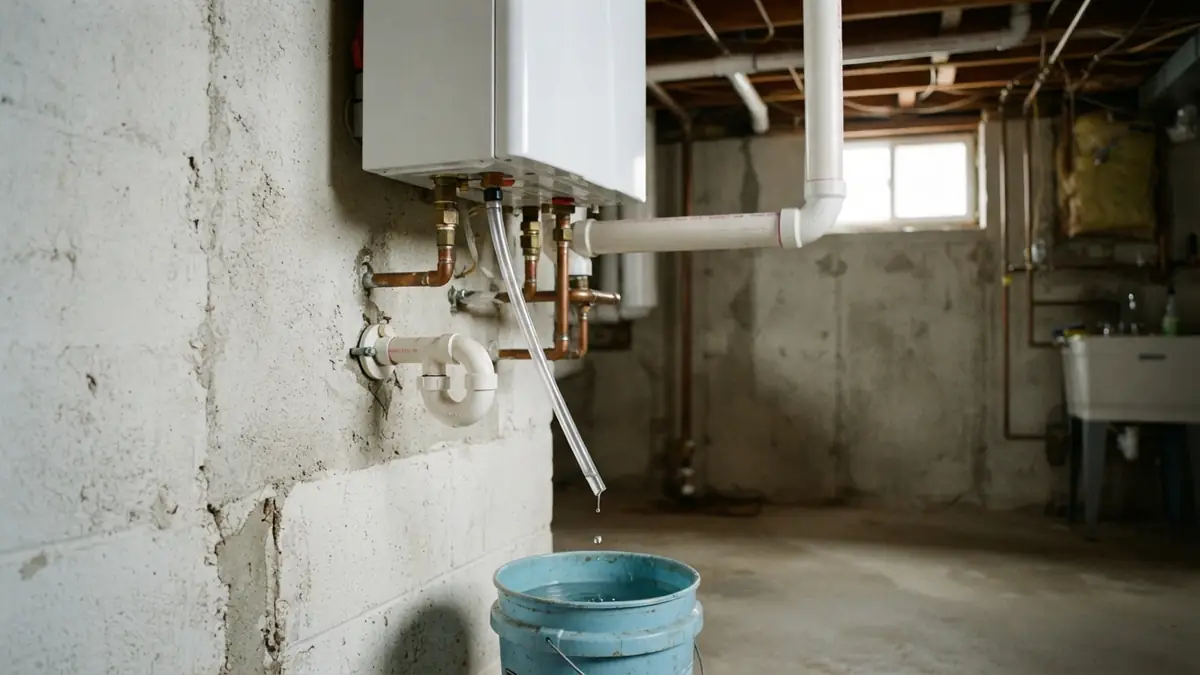
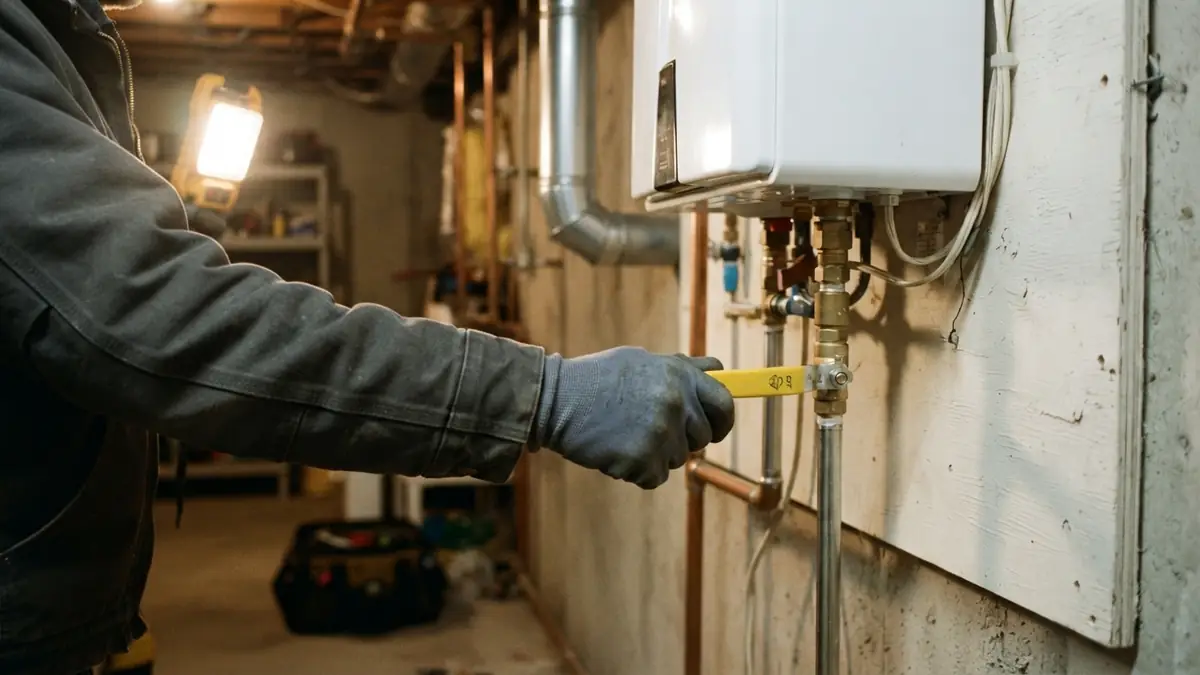
Frozen Tankless Water Heater? What to Do Now, and 5 Ways to Stop It Happening Again
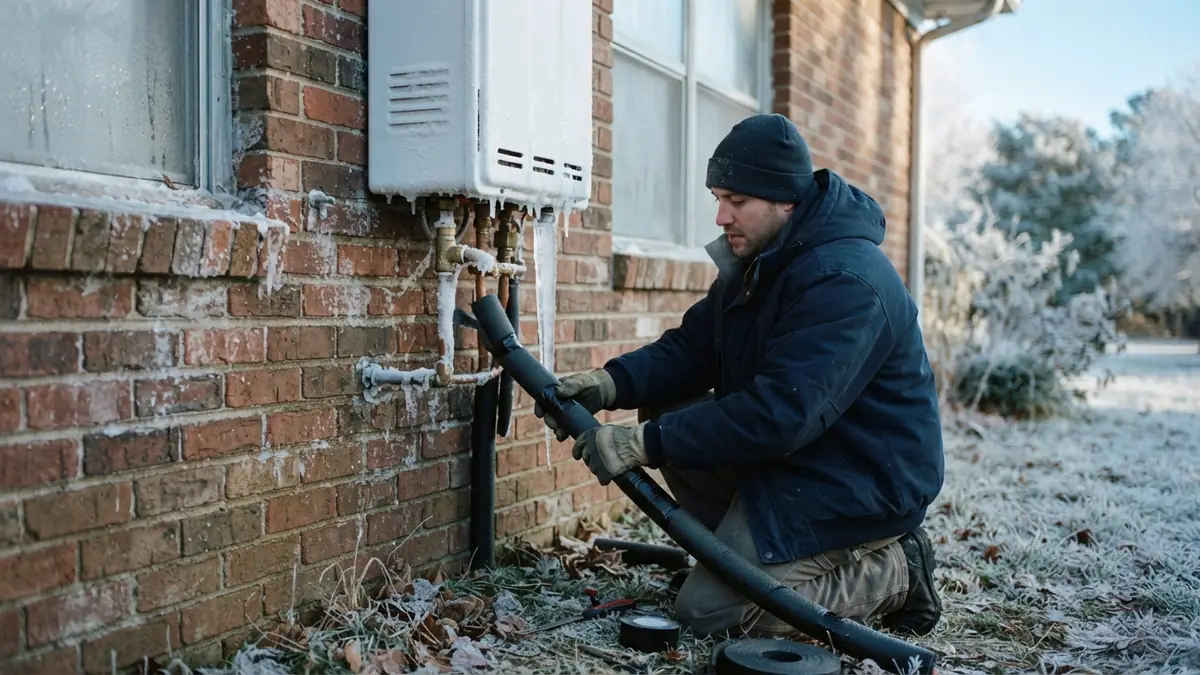
A frozen tankless water heater usually shows itself the same way: cold water works, hot water is a trickle or nothing at all, and the unit may be showing a code. Most units on outside or exterior walls have electric freeze protection built in, so a freeze-up usually means that protection was beaten, most often because the power went off or because the pipes outside the unit froze first.
Below: how to tell which part froze, what to do right now, why built-in protection does not cover everything, and five ways to stop it happening again. If a pipe has split or water is coming from the unit, close the cold valve, switch the unit off at its power switch if it is safe to reach, and get a technician out.
Is it the unit or a pipe?
The pipes feeding the unit freeze first. The unit protects its own insides, while the pipes under it have nothing but their insulation. The signs of a frozen supply line are cold water that works fine, hot taps that give a thin trickle or nothing, and frost or ice on the fittings below the unit. One owner with a unit on an outside wall described exactly that: a tiny trickle on the hot side and nothing else.
If the pipes look clear but the unit shows a code, the inside may be affected, and that needs a technician.
What to do right now
Keep the unit powered. Its freeze protection only works with power on, and on many units with gas as well. Open a hot tap slightly so you can see when water starts moving. If you can see a frozen length of exposed supply pipe, warm it gently, with towels soaked in warm water for example. Never use a flame, and keep heat away from the unit, its vent and its gas fittings. If you cannot find the frozen spot, it may be inside a wall, and waiting for the thaw or calling a plumber beats heating things blindly.
When the ice melts, split pipes show themselves as leaks. If you see water, close the cold valve under the unit, switch the unit off and call. Do not run the unit hard until it has been checked.
Why built-in freeze protection is not a guarantee
Freeze protection is an electric safeguard that keeps the inside of the unit above freezing when the temperature drops, within the range your manual gives. It needs power, and on many units gas too. It protects the unit's critical internal parts, not the pipes beneath it and not the lines running through an exterior wall. A power cut on the coldest night is exactly when it cannot help. Some owners report the same exterior-wall unit freezing every winter, which tells you the cause is the location, not bad luck.
1. Keep it powered
Leave the unit plugged in and switched on all winter, and do not turn it off at the wall to save energy. If your area loses power in cold snaps, remember that the protection is off during the outage, and keep an eye on the lines until power returns. After an outage, check that you have hot water before the next freeze, not after it.
2. Insulate the exposed pipes
Foam insulation on the supply pipes you can reach is the cheapest protection there is, especially the lines under the unit and any run along an exterior wall. Follow your manual on what not to cover around the cabinet, the vent and the intake. Pipes inside an exterior wall can freeze even when everything visible is wrapped, and reworking those is a plumber's job.
3. Keep the vent and intake clear
Snow or ice piled against the termination can block it, and a blocked termination brings a venting code: 10 on Rinnai and Noritz, E110 on Navien. Clear what you can reach by hand and leave the pipe itself alone. The guide to codes explains what each one points to.
4. Think before you trickle
A slow trickle from a tap on the coldest nights is common advice for pipes, and owners do ask whether it is fine with a tankless unit. It keeps water moving in the lines, but whether your maker recommends it is a question for the manual. Treat it as a stopgap for a forecast freeze, not a plan.
5. Fix the spot that keeps freezing
If the same unit freezes every winter, the lasting fix is changing what is exposed: better insulation, an insulated enclosure or a rerouted line. Owners of exterior-wall units ask about all three. That is plumber work, and it is usually better value than repairing the same damage every winter. A split pipe or fitting is often the cheaper damage. If the unit froze inside, part repairs are estimated at $150 to $800, and a cracked heat exchanger at $1,000 to $2,500. The leak guide helps you trace what you find after the thaw.
Quick answers
How do I unfreeze a tankless water heater?
Do not try to thaw the unit itself. Keep its power on, warm any visible frozen supply pipe gently with warm towels, and never use a flame. If there is no hot water after the thaw, or you see a leak, switch the unit off, close the cold valve and call.
Does a tankless water heater need power for freeze protection?
Yes. The built-in protection is electric, so it only works while the unit has power, and on many units gas as well. A power cut during a freeze removes it.
Is it OK to trickle water on freezing nights with a tankless?
Owners do it to keep water moving in the lines, but whether it is right for your unit is a question for the manual. It is a stopgap for a forecast freeze, not a substitute for insulation.
How do I keep a Rinnai tankless water heater from freezing?
Keep it powered, insulate the exposed supply pipes, keep the vent and intake clear of snow, and follow the freeze guidance in the manual. If an exterior-wall unit freezes every winter, ask a plumber about where the pipes run.
Still no hot water?
A technician who works on tankless units can test it and price the fix in writing.